What if riding home on two wheels after a few drinks isn’t as risk-free as you think? While bicycles lack engines, state laws often treat them like vehicles in surprising ways. In Colorado and over 20 other states, operating a bicycle under the influence can lead to fines, license suspensions, or even jail time.
Though cyclists are rarely stopped for impaired riding, police have the authority to enforce DUI regulations in most jurisdictions. Legal definitions vary, but many classify bicycles as “vehicles” under traffic codes. This means riders face similar penalties to drivers, though enforcement often depends on local priorities.
Nighttime cycling’s growing popularity has sparked more questions about these rules. From field sobriety tests to potential defenses, understanding how alcohol impacts cycling legality matters now more than ever. Let’s break down what every rider needs to know.
Key Takeaways
- Bicycles qualify as vehicles under DUI laws in multiple states
- Penalties may include fines, license restrictions, or criminal charges
- Field sobriety tests apply to cyclists during traffic stops
- Enforcement practices differ widely between cities and states
- Safety risks increase significantly when riding impaired
- Legal defenses exist but require case-specific analysis
Understanding DUI Laws for Bicyclists in the United States
Bicycles occupy a unique space in traffic legislation across America. While riders often assume they’re exempt from impaired operation rules, state statutes frequently classify bicycles as vehicles under DUI laws. Colorado’s legal framework exemplifies this approach through C.R.S. § 42-4-102(112), which explicitly includes human-powered transportation in its vehicle definition.
Defining “Vehicle” in DUI Statutes
Legal systems distinguish between motor vehicles and bicycles but often apply similar operating standards. In Colorado, C.R.S. § 42-4-1301 prohibits controlling any vehicle while impaired, regardless of propulsion method. This expansion of traditional DUI laws means cyclists face:
- Blood alcohol concentration (BAC) limits matching motorist standards
- Potential license suspensions even without a motorized vehicle
- Criminal charges for reckless operation
State-by-State Variations in Enforcement
Jurisdictions interpret vehicle classifications differently. California penalizes bicycling under the influence as a misdemeanor, while Texas treats it as a civil offense. Key factors influencing enforcement include:
- Local law enforcement priorities
- Judicial interpretations of traffic codes
- Public safety initiatives targeting impaired riders
Courts frequently examine statutory language to determine if bicycle operation falls under DUI provisions. These decisions create patchwork legal landscapes where consequences vary dramatically between neighboring states.
Can you get a dui on a bike? Unpacking the Question
Cycling under alcohol’s influence triggers legal consequences many riders don’t anticipate. State traffic codes often apply motor vehicle DUI standards to bicycles, creating potential penalties for impaired operation. The critical factor? Blood alcohol concentration thresholds mirroring those for drivers.
Legal Framework and Regulations
All 50 states prohibit operating vehicles while intoxicated, with many explicitly including bicycles in their definitions. While statutes vary, most jurisdictions use a 0.08% BAC threshold for adults – identical to automotive DUI limits. Underage cyclists face stricter standards, typically 0.01-0.05%, depending on state laws.
Interpreting Blood Alcohol Concentration Limits for Cyclists
Law enforcement uses identical testing methods for cyclists and drivers:
- Breathalyzers during traffic stops
- Blood tests following arrests
- Field sobriety assessments
| State | Adult BAC Limit | Underage Threshold |
|---|---|---|
| California | 0.08% | 0.01% |
| Colorado | 0.08% | 0.02% |
| Texas | 0.08% | 0.00% |
| New York | 0.08% | 0.02% |
| Florida | 0.08% | 0.02% |
Prosecutors must prove actual impairment or BAC exceeding legal limits. Some states allow DUI riding charges based solely on test results, while others require additional evidence of dangerous behavior. Understanding these nuances helps cyclists navigate both legal risks and roadway safety concerns.
Examining the Impact of Alcohol on Cycling Safety
Many cyclists underestimate how a single drink can transform their ride into a dangerous gamble. Research shows a 30% increase in accident risk when operating bicycles after alcohol consumption. This impairment affects both casual riders and daily commuters, creating hazards that ripple across entire road networks.
Effects on Reaction Time and Coordination
Alcohol slows neural processing, delaying critical decisions by 10-30% according to University of Iowa studies. Cyclists lose the ability to:
- Swiftly brake for sudden obstacles
- Maintain straight trajectories
- Coordinate pedal strokes with balance
Even at 0.05% BAC – below legal limits – riders show measurable skill declines. These deficits prove particularly dangerous when navigating potholes or avoiding car doors.
Risks to Cyclists and Other Road Users
Impaired cycling creates domino effects in traffic ecosystems. A Johns Hopkins analysis found intoxicated riders are:
- 3x more likely to ignore stop signs
- 60% less likely to use hand signals
- Twice as prone to nighttime visibility errors
These behaviors endanger pedestrians, drivers, and fellow cyclists. Quiet neighborhood streets offer no protection – 40% of alcohol-related bicycle crashes occur on low-traffic roads.
Key takeaway: No amount of alcohol mixes safely with cycling. Planning alternative transportation preserves both legal standing and physical safety for all road users.
Legal Penalties and Consequences for Impaired Cycling
Riding a bicycle while impaired carries tangible legal repercussions across multiple states. Colorado’s approach demonstrates how jurisdictions treat these offenses with severity comparable to motor vehicle violations. Consequences escalate with repeat incidents, creating lasting impacts beyond initial penalties.
Financial and Criminal Penalties
First-time offenders in Colorado face:
- $600-$1,000 fines plus court fees
- 5 days to 1 year in jail
- 48-96 hours of community service
Repeat violations trigger stricter measures. Third offenses mandate 60-day minimum jail terms and 2-year license suspensions. Courts frequently require alcohol education programs – 24-72 hours of classes addressing substance abuse risks.
License Points and Driving Privileges
While bicycle DUIs don’t directly affect driving records, Colorado applies a 12-point system:
| Offense | Points Added | License Impact |
|---|---|---|
| First | 12 | 9-month suspension |
| Second | 12 | 1-year suspension |
| Third | 12 | 2-year suspension |
These points apply to motor vehicle privileges, not bicycle operation. Insurance rates often rise 20-30% after convictions, even without car involvement. Unlike drivers, cyclists avoid vehicle impoundment but face identical criminal records affecting employment and travel.
Field Sobriety Tests and Evidence Gathering for Bicycle DUI Cases
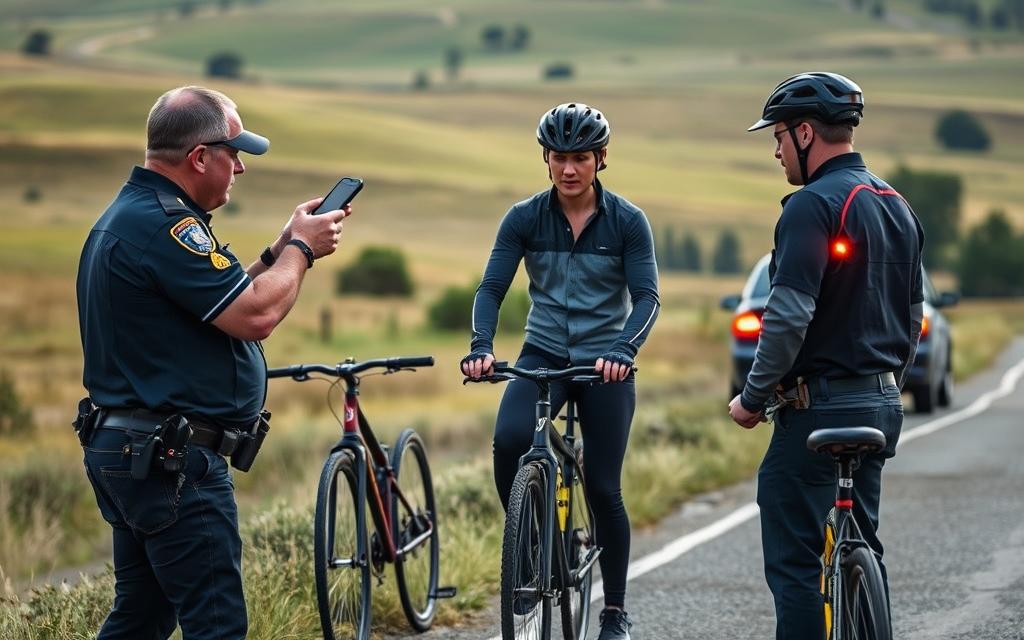
Police officers use standardized methods to assess impairment in cyclists, mirroring protocols typically seen in automotive stops. These evaluations begin with visual observations – swerving, erratic speed changes, or balance issues. Three primary tools help authorities build cases against riders suspected of operating under the influence.
Types of Field Sobriety Tests Used
The National Highway Traffic Safety Administration approves three field sobriety tests for cyclists:
- Horizontal gaze nystagmus (tracking eye movements)
- Walk-and-turn maneuvers adapted for bicycle dismounts
- One-leg stand assessments near parked bikes
Officers often modify tests for road conditions. A 2021 Colorado case showed courts accepting modified procedures when riders couldn’t perform standard automotive tests.
Challenging the Accuracy of Chemical Tests
Breathalyzers and blood tests face scrutiny in bicycle cases. Common issues include:
- Improper calibration of portable breathalyzer units
- Delays in blood sample collection altering BAC levels
- Medical conditions affecting test reliability
Defense attorneys frequently question whether alcohol-drug combinations skewed results. A 2023 Arizona ruling threw out evidence when officers failed to document device calibration for 90 days.
Weather and physical exertion can also impact test accuracy. Cyclists riding uphill often show elevated breath alcohol readings due to heavy breathing patterns – a factor many jurisdictions now consider.
Defenses and Legal Strategies for DUI on a Bike
Facing charges for riding under driving influence requires smart legal moves. Attorneys often challenge two critical areas: whether the stop was lawful and if evidence proves impairment. Success hinges on case-specific details and procedural errors authorities might make.
Questioning the Legality of the Traffic Stop
Law enforcement must have reasonable suspicion to initiate a bicycle stop. Defense teams frequently argue:
- No observed traffic violations occurred
- Rider behavior didn’t indicate impairment
- Stop resulted from personal bias
A 2022 Colorado case saw charges dismissed when officers couldn’t prove the cyclist swerved before being pulled over. Courts often exclude evidence if stops violate Fourth Amendment rights.
| State | Common Defense Strategy | Success Rate |
|---|---|---|
| California | Invalid stop justification | 38% |
| Texas | Lack of probable cause | 42% |
| Florida | Misinterpreted cycling patterns | 27% |
Disputing the Reliability of Test Results
Chemical tests face scrutiny when influence alcohol drugs combinations exist. Defense experts highlight:
- Breathalyzer calibration gaps exceeding 30 days
- Medical conditions skewing BAC readings
- Improper blood sample storage
An Arizona court recently threw out evidence due to outdated breath-test device certifications. Physical exertion during cycling can also distort results – heavy breathing may inflate breath alcohol levels by up to 15%.
Effective strategies require specialized attorneys familiar with traffic code nuances. Many states allow plea bargains reducing charges to reckless cycling if blood tests show BAC below 0.10%. Always consult counsel immediately after any arrest involving driving influence allegations.
Common Misconceptions and Legal Clarifications
Many riders confuse bicycle-related alcohol offenses with general public intoxication, creating dangerous gaps in legal understanding. While both involve alcohol consumption, their applications differ sharply across jurisdictions.
Distinguishing Between Public Intoxication and DUI
Public intoxication laws target individuals endangering themselves or others in shared spaces. California penalizes disorderly conduct for visibly impaired people in public areas, regardless of vehicle use. In contrast, bicycle DUI regulations specifically address operating a vehicle while intoxicated.
Key differences emerge in enforcement. Florida defines bicycles as vehicles under its traffic codes, allowing DUI charges for cyclists. However, Alaska exempts pedal bikes from these laws entirely. This patchwork of state-level interpretations means riders must know local statutes.
Three critical clarifications every cyclist needs:
- DUI charges require vehicle operation, while public intoxication focuses on presence in shared spaces
- Some states like Texas issue fines instead of criminal charges for impaired cycling
- Field sobriety tests apply only during active riding, not when walking a bike
Misunderstanding these distinctions leads to risky behavior. People often assume riding slowly avoids legal trouble, but most states base charges on BAC levels or observable impairment. Regular commuters should review their state’s specific cycling laws to prevent costly mistakes.
Conclusion
Navigating bicycle DUI laws requires awareness of both traffic codes and personal responsibility. Most states classify riding bicycles as vehicle operation under DUI statutes, with penalties ranging from fines to license suspensions. Legal outcomes depend heavily on local interpretations of “motor vehicles” and blood alcohol concentration thresholds.
Key insights reveal:
- 38 states apply automotive-style BAC limits to cyclists
- Field sobriety tests and chemical analysis methods mirror those used for drivers
- Repeat offenses often trigger mandatory jail time and multi-year license restrictions
Alcohol impairment increases collision risks by 30% while reducing riders’ ability to navigate safely. Though enforcement varies, courts increasingly treat bicycle DUIs as seriously as car-related charges. Effective defenses challenge traffic stop legality or test accuracy through technical arguments.
Review your state’s specific DUI laws before riding after consuming alcohol. If facing charges, immediately consult an attorney familiar with bicycle-related statutes. Prioritize alternative transportation options to protect your legal standing and ensure safer roads for all users.