
What happens when state-approved cannabis treatment meets federal air travel rules? While 38 states permit medical use of cannabis, federal law still labels it a controlled substance. This creates a gray area for patients traveling between regions with differing regulations.
TSA agents prioritize security threats, not searching for THC products. However, if they spot cannabis during screening, they must alert law enforcement. Even with a valid prescription, travelers risk confiscation or legal complications depending on local policies.
Preparation is critical. Proper documentation, discreet packaging, and awareness of destination laws reduce risks significantly. This guide explains how to navigate conflicting state and federal rules while protecting your health needs during transportation.
Key Takeaways
- TSA focuses on security threats but reports cannabis findings to authorities
- Federal prohibition applies in airports despite state-level legality
- Carry original prescriptions and state-issued medical cards
- Research destination laws for THC possession limits
- Consider alternatives like CBD or non-intoxicating options when traveling
Understanding TSA Regulations and Federal Law
Airport security protocols create unique challenges for travelers relying on cannabis-based treatments. While states authorize therapeutic access, federal jurisdiction over airports introduces conflicting rules.
TSA Screening Procedures and Security Focus
TSA agents prioritize detecting explosives, weapons, and aviation threats. Screening equipment may flag cannabis products during routine checks, though officers don’t actively hunt for them. If illegal substances appear, agents must contact law enforcement per federal mandates.
This process applies even in states where cannabis is legal. Officers follow standardized protocols regardless of local laws, creating potential complications for patients.
How Federal Regulations Impact Medical Cannabis
Federal law classifies most THC products as Schedule I substances. This designation overrides state-level protections in airports and aircraft. Recent court rulings confirm Congress maintains authority to regulate cannabis nationally.
| TSA Focus | Law Enforcement Role | Patient Considerations |
|---|---|---|
| Aviation safety threats | Enforce drug laws | Carry documentation |
| Weapons detection | Investigate found substances | Know THC limits |
| Prohibited items screening | Determine charges | Research destination laws |
Patients should verify their products meet the 0.3% THC threshold for federal exemption. Those carrying FDA-approved medications face fewer risks than traditional cannabis preparations.
Traveling with Medical Marijuana: Can You Fly with Medical Marijuanas
The clash between state-approved cannabis access and federal restrictions creates a maze of uncertainty for patients. While 38 states recognize therapeutic cannabis use, airports operate under national jurisdiction where it remains prohibited.
Clarifying the Legal Gray Area
State laws protect registered patients who possess cannabis within approved limits. However, federal agencies control airspace and transportation hubs. This split authority means travelers technically violate federal law when carrying cannabis through security checkpoints.
Key differences between state and federal perspectives create risks:
| State Protections | Federal Reality | Practical Impact |
|---|---|---|
| Legal possession up to state limits | No recognition of medical status | Possible confiscation |
| Approved consumption methods | All THC products prohibited | Legal referrals |
| Valid medical cards | No exemption for prescriptions | Documentation challenges |
Research destination laws thoroughly – 15 states prohibit all cannabis forms despite federal prohibition. Always carry original prescriptions and state-issued cards to demonstrate compliance with local regulations where permitted.
Patients should consult their healthcare providers about temporary alternatives when crossing jurisdictions. Non-intoxicating CBD products under 0.3% THC offer one federally compliant option, though airport screenings still pose challenges.
Preparing Your Documentation for a Smooth Journey
Proper paperwork transforms cannabis travel from risky to manageable. While federal laws remain strict, organized documentation helps demonstrate compliance with regional regulations.
Essential IDs and Prescription Documents
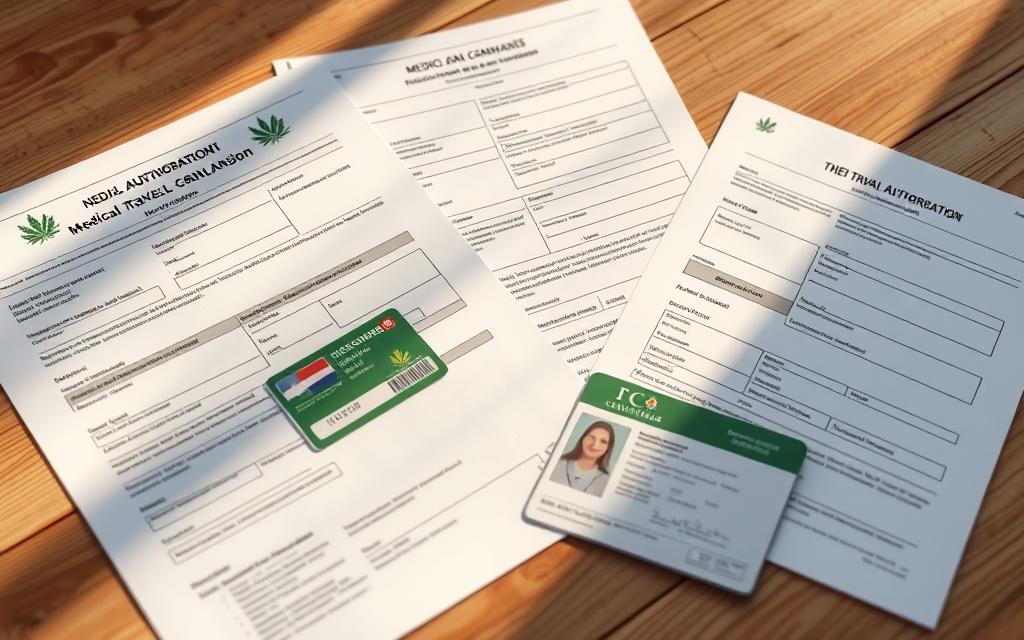
Carry three critical items through security checkpoints:
- Government-issued photo ID matching your medical cannabis card
- Original prescription with dosage details and provider contact
- State-issued patient authorization showing current enrollment
TSA agents may request verification during screenings. Digital copies stored in cloud accounts provide backup if physical documents get lost.
Securing Clinic Travel Letters
Many cannabis clinics offer travel-specific letters confirming treatment necessity. These documents typically include:
- Physician license number and clinic contact
- Patient diagnosis and prescribed THC percentage
- Travel dates matching itinerary
Clinics like Curaleaf often process requests through online portals. Allow 3-5 business days for letter preparation before departure.
Update prescription copies via patient portals annually. Clear expiration dates prevent outdated paperwork issues. Proactive preparation reduces airport stress while maintaining legal access to essential treatments.
Packing and Transporting Your Medical Cannabis Safely
Securing cannabis products during air travel demands strategic planning to comply with evolving regulations. Federal guidelines and airline policies require meticulous attention to storage methods and container choices.
Carry-On vs. Checked Bags: What You Need to Know
TSA strongly recommends keeping medical cannabis in carry-on luggage. Officers prefer inspecting items directly rather than searching checked baggage, which may delay flights. Checked bags face higher theft risks and temperature changes that could degrade product quality.
Consider these critical factors:
- Carry-ons allow immediate access to documentation if requested
- Checked luggage might violate airline cannabis policies
- Battery-powered vaporizers must stay in carry-ons per FAA rules
Proper Packaging and Labeling Guidelines
Use smell-proof, airtight containers to prevent odor detection during screening. Preserve original packaging with clear dosage labels and batch numbers. Attach a copy of your prescription to the container using a rubber band or adhesive sleeve.
Follow this three-step process:
- Place products in child-resistant pharmacy containers
- Seal containers in opaque, smell-blocking bags
- Store documentation separately but within easy reach
Always verify airline-specific laws before packing. Some carriers prohibit all cannabis products, even with state authorization. Double-check THC percentages meet federal thresholds to avoid transportation issues.
Navigating State Lines and International Regulations
Crossing jurisdictions with cannabis-based treatments demands careful legal navigation. Patients face different rules every time they cross borders – whether between neighboring states or overseas. Researching regional statutes becomes essential for avoiding unintended violations.
Understanding Regional Legal Differences
State laws vary dramatically for medical cannabis possession. Idaho and Kansas impose total bans, while Oklahoma allows 3 ounces. International borders create starker contrasts – Japan prohibits all THC products, and Germany requires special import permits.
| Jurisdiction Type | Key Considerations | Compliance Strategies |
|---|---|---|
| State Lines | Reciprocity agreements Possession limits Product types allowed |
Check health department websites Carry patient registry cards Use original packaging |
| International Borders | Import restrictions Prescription recognition Criminal penalties |
Contact embassies Obtain travel letters Consider local alternatives |
Seven states arrest travelers carrying any cannabis products. Always verify destination laws through official channels before departure. The U.S. State Department website provides updated country-specific drug policies.
Patients should request notarized physician statements when traveling abroad. Some nations like Canada accept foreign medical cannabis authorizations if pre-approved. Others require switching to locally prescribed alternatives.
Domestic travelers face fewer hurdles but still need caution. Keep products in sealed containers with prescription labels when crossing state lines. Federal highways remain under national jurisdiction, complicating interstate transport.
Exploring Alternative Travel Options
Patients seeking stress-free transportation methods often overlook ground-based choices. While airports present federal challenges, trains and buses operate under different regulations that might better suit therapeutic needs.

Surface Transportation Advantages
Amtrak’s cannabis policy prohibits products in checked baggage but allows carry-ons complying with state laws. This creates opportunities for regional travelers moving between areas with legal access. Unlike airports, train stations rarely use advanced screening for personal items.
Key benefits of rail travel include:
- Reduced security checks for medical cannabis
- Clearer state-specific enforcement policies
- Private storage compartments for medications
| Transportation Method | Cannabis Policy | Patient Tips |
|---|---|---|
| Interstate Buses | Follow federal guidelines | Use odor-proof containers |
| Car Rentals | Subject to state laws | Keep in original packaging |
| Rideshares | Driver discretion applies | Disclose medications upfront |
Always verify carrier rules before booking. Greyhound prohibits all cannabis transport, while regional services may allow medical exceptions. Road trips offer maximum control but require researching laws for each state crossed.
International travelers face stricter limitations. Canada permits medical cannabis entry with advance approval, while most European nations ban all THC products. Consult embassy websites for updated policies 72 hours before departure.
Dealing with Law Enforcement and Security Screenings During Travel
Navigating security checkpoints requires both preparation and composure. Travelers carrying therapeutic cannabis must balance compliance with self-advocacy while respecting screening protocols.
Best Practices When Stopped by Security Officers
Stay calm and cooperative if questioned. Officers respond better to clear communication than emotional reactions. Keep hands visible and avoid sudden movements during interactions.
Verbally disclose cannabis products before screening begins. Say: “I have state-approved therapeutic products and documentation.” This proactive approach builds trust and demonstrates transparency.
How to Present Your Medical Cannabis Documentation
Keep paperwork organized in a dedicated folder. Follow this sequence when asked:
- State-issued patient ID card
- Original prescription with physician details
- Notarized travel letter from your clinic
Ensure documents show current dates and matching personal information. Digital backups on your phone provide quick access if physical copies get misplaced.
TSA agents typically review materials within 90 seconds. Highlight prescription validity dates and authorized THC percentages. If referred to law enforcement, politely restate your compliance with local state laws governing therapeutic access.
Conclusion
Traveling with therapeutic cannabis requires balancing legal awareness and practical preparation. While state laws protect patient access, federal aviation rules create unavoidable risks. Proper documentation – including current prescriptions and clinic letters – remains essential for demonstrating compliance during screenings.
Secure packaging minimizes odor detection, while understanding TSA priorities helps navigate checkpoints smoothly. Researching destination regulations prevents unexpected penalties, especially when crossing borders. Resources like Curaleaf Clinic’s travel preparation guide offer updated checklists for medication transport.
Patients should prioritize ground transportation where possible and consult healthcare providers about temporary alternatives. Staying informed about evolving laws ensures continued access to vital treatments without legal complications. With careful planning, therapeutic cannabis users can maintain their wellness routines while respecting jurisdictional boundaries.


