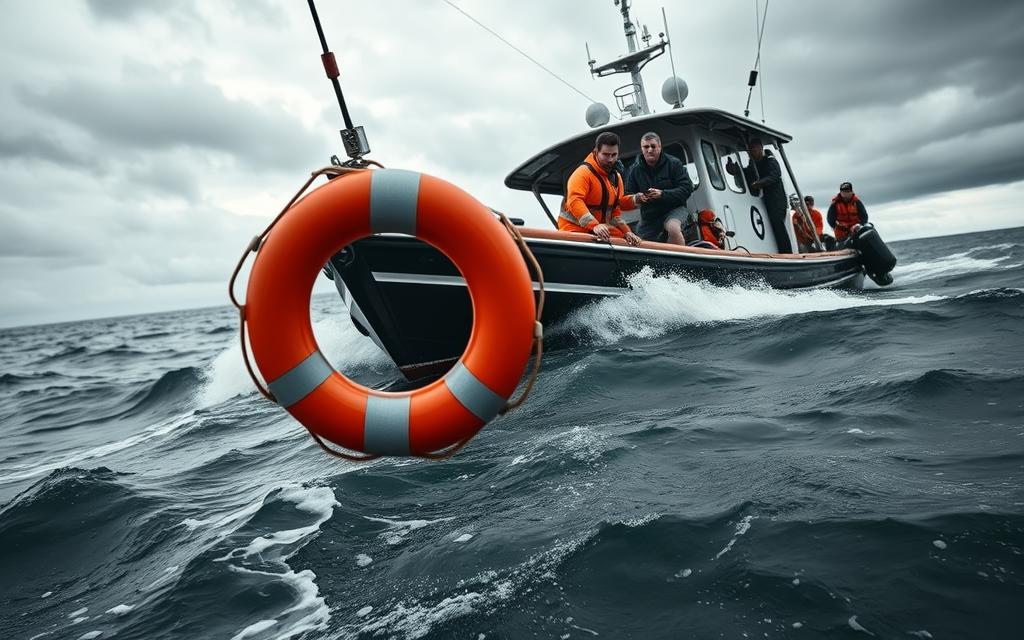
Every year, about 4,168 boating accidents happen in the United States. Almost 2,559 people get seriously hurt. If a boating accident occurs, the first thing to do is stay calm and keep everyone safe.
Boat operators need to check the situation right away and make sure everyone is safe. Fast thinking and quick actions can save lives. It’s important for all boaters to know what to do in an accident.
The time right after an accident is very important. Your main job is to stop more harm, help anyone who’s hurt, and keep your boat steady. Knowing what to do can help keep everyone safe.
Key Takeaways
- Stay calm and assess the immediate situation
- Prioritize passenger safety above all else
- Check for possible injuries quickly
- Stabilize the boat to prevent more risks
- Prepare to call emergency services if needed
Understanding Boating Accidents
Boating adventures can quickly turn dangerous when unexpected incidents occur. It’s key for every water enthusiast to know how to help and report incidents well.
Boating accidents include many emergencies on the water. They can change a peaceful day into a critical situation needing quick action.
What Qualifies as a Boating Accident?
A boating accident is any serious incident on the water. This includes:
- Vessel collisions with other boats or stationary objects
- Passengers falling overboard
- Equipment failures that compromise boat safety
- Incidents resulting in injury or significant property damage
Common Causes of Boating Accidents
Knowing the causes helps boaters avoid risks. Main factors are:
- Operator inattention – losing focus on water conditions
- Excessive speed in crowded or restricted areas
- Inadequate safety equipment
- Impaired operation due to alcohol consumption
- Lack of proper navigation skills
Importance of Immediate Action
When an accident happens, fast action is key. Boat operators must focus on safety, quickly assess the situation, and help those in need.
Reporting an incident quickly is very important. It helps with emergency response and legal actions. Always put human life first and follow safety rules.
The First Action for Boat Operators
When a boating accident happens, quick actions are very important. Boat operators need to stay calm and act fast. They must protect everyone on board and collect evidence for investigations.
Right after an accident, your main goals are to keep people safe and make the boat stable. Doing this right can stop more damage and help with legal or insurance claims.
Assessing the Situation
Right after a crash, boat operators should:
- Stop all vessel movement
- Turn off engines to prevent additional damage
- Check surrounding water conditions
- Evaluate possible dangers
Checking for Injuries
Keeping everyone safe is the most important thing. Check each person for injuries:
- Make sure everyone is wearing a life jacket
- Look for any visible injuries
- Ask if anyone is in pain
- Get ready with basic first aid
Securing the Vessel
To keep evidence safe and avoid more problems, do these important things:
| Action | Purpose |
|---|---|
| Anchor or stabilize boat | Stop it from drifting and more risks |
| Deploy emergency signaling devices | Get help from nearby boats and rescuers |
| Preserve accident scene | Keep evidence for authorities |
Remember: Staying calm and following these steps can greatly affect the outcome of a boating accident.
Reporting the Accident
Boating accidents can be very stressful. It’s important to know how to report them right. This helps prevent more damage and helps those hurt.
When an accident happens, call the authorities fast. This is to keep everyone safe and start the paperwork.
When to Contact Emergency Services
You need to call for help right away if:
- Someone is badly hurt and needs a doctor
- There are deaths or people missing
- The boat is badly damaged
- There’s a danger to the environment
Critical Information to Provide
When you report an accident, give important details. This helps responders know what’s happening:
| Information Category | Specific Details to Report |
|---|---|
| Location | Precise GPS coordinates or nearest landmark |
| Vessel Description | Type, size, color, registration number |
| Passenger Count | Total number of people on board |
| Injury Status | Number and severity of injuries |
Documentation Requirements
It’s key to document everything for insurance and legal reasons. Keep these:
- Photos of the accident scene
- Info of people who saw it
- The official accident report number
- Insurance details of those involved
Always put safety first and help those who need it in a boating emergency.
Medical Assistance After an Accident
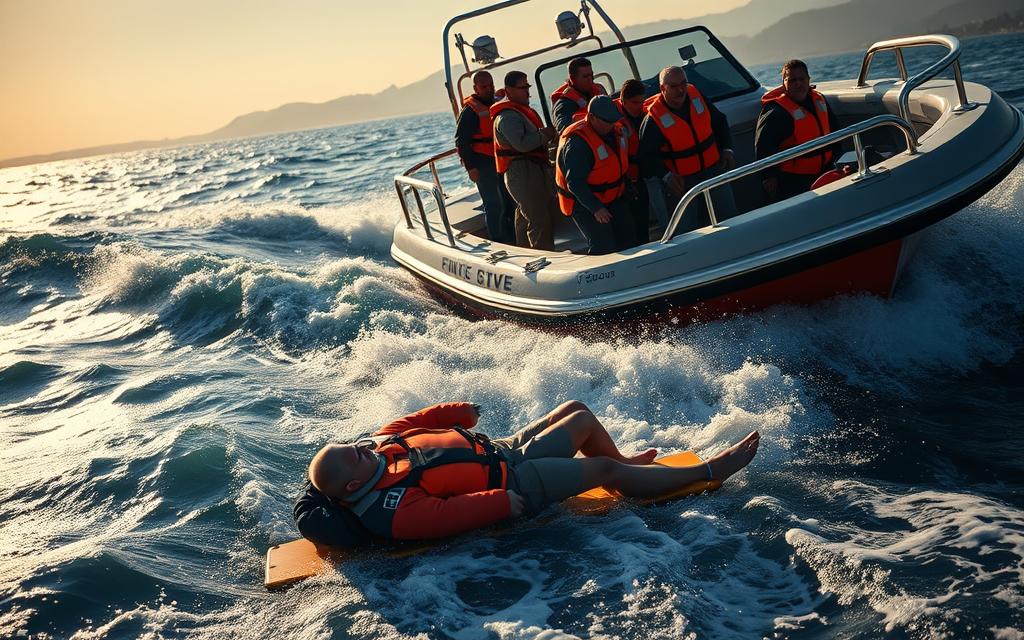
Boating accidents can quickly turn dangerous. It’s very important to get medical help right away. Knowing how to give first aid can save lives.
Prioritizing Affected Individuals
When a boating accident happens, you need to check injuries first. Here are some important steps:
- Check if they can respond
- See if they are breathing
- Look for any bleeding
- Check for spinal injuries
First Aid Measures
Good first aid can help keep people safe until help arrives. Here are some important steps:
- Stop bleeding by applying pressure
- Elevate injured limbs
- Keep them warm with blankets
- Position unconscious people safely
When to Seek Emergency Help
Some injuries need help right away. Call for help if you see:
- Uncontrolled bleeding
- Difficulty breathing
- Suspected head or spinal injuries
- Signs of shock
Always put safety first. Be ready to call for help using a marine radio or phone for serious injuries.
Legal Responsibilities of Boat Operators
Boating comes with big legal rules that every operator must know. The first thing to do after a boating accident is to make sure everyone is safe. It’s also important to follow the law.
Boat operators have many legal duties. These rules help keep everyone safe, including passengers and the environment.
Overview of Boating Laws
Federal and state laws control how we boat. Important rules include:
- Maintaining proper safety equipment
- Reporting accidents within specific timeframes
- Ensuring all passengers wear life jackets
- Operating the vessel responsibly
Consequences of Failing to Comply
Not following boating laws can lead to big problems. Possible outcomes are:
- Substantial monetary fines
- Suspension of boating privileges
- Criminal charges for serious violations
- Civil liability for damages
Importance of Legal Representation
Getting a good lawyer is very important after a boating accident. An experienced maritime attorney can help you. They can guide you through legal steps and protect your rights.
Knowing and following the law is key to safe boating. Being prepared can prevent accidents and avoid legal issues.
Collecting Evidence at the Scene
After a boating accident, it’s key to gather all the evidence you can. This is for legal and insurance reasons. Taking the right steps can help a lot with investigations and claims.
When you start collecting evidence, aim to get the most important details. These will help with your report and any legal actions later.
Photographing the Accident Scene
Photos are your best friend in keeping the accident details clear. Use your phone or camera to take pictures from different angles.
- Photograph vessel damage from various distances
- Capture surrounding water and environmental conditions
- Document any visible injuries
- Take wide-angle shots showing the entire accident area
Recording Witness Information
What witnesses say can be very helpful. Get their contact info and a quick summary of what they saw.
| Witness Information | Details to Collect |
|---|---|
| Full Name | Accurate spelling and contact details |
| Contact Information | Phone number and email address |
| Statement | Brief, factual description of observed events |
Noting Weather and Water Conditions
Weather and water conditions are important in understanding accidents. Carefully document specific conditions that might have caused the accident:
- Wind speed and direction
- Wave height and water current
- Visibility conditions
- Time of day
- Temperature
Collecting evidence well helps you help others and makes your report better. Your hard work can really help with what happens after the accident.
Communicating with Other Parties
After a boating accident, it’s key to talk well with others. This helps keep everyone safe and protects your rights. How you talk to others can really change how things go.
When you talk to others after the accident, stay calm and act professional. Your main goals are to get evidence and call the authorities. Also, make sure to protect your rights.
Exchange of Critical Information
Get important info from everyone involved in the accident. Use a clear plan to make sure you get all the details:
- Full names of boat operators
- Contact information
- Insurance details
- Boat registration numbers
- Witness contact information
Professional Interaction Strategies
Here are some important tips for talking to others:
- Stay calm and polite
- Don’t say you were at fault
- Don’t talk too much about the accident
- Just focus on getting the facts
Insurance Claim Navigation
| Action Step | Key Considerations |
|---|---|
| Report Accident | Contact insurance provider within 24-48 hours |
| Documentation | Prepare accident report, photos, and witness statements |
| Communication | Be truthful but concise with insurance adjuster |
Remember, good communication can help protect your rights and make things easier after the accident.
Safety Equipment on Board

Boating safety starts with the right gear. Every boat needs key safety items. These help quickly in emergencies.
Safety gear is not just a good idea. It’s a must-have for safety on the water. Being ready can save a lot of trouble.
Necessity of Life Jackets
Life jackets are the most important safety item. The U.S. Coast Guard says to wear them always, not just keep them in the cabin. There are many types of life jackets:
- Inflatable vests for comfort
- Standard foam jackets for staying afloat
- Special jackets for different water sports
Importance of Flares and Emergency Kits
Emergency kits are key for signaling and survival. A good kit has:
- Waterproof flares
- Signal mirrors
- Whistle
- First aid supplies
- Waterproof communication tools
Regular Equipment Checks
Keeping your gear in check is vital for safety. Check your safety gear before every trip. Make sure flares are good, test devices, and check life jackets.
Remember, safety gear is an investment in your safety and peace of mind. It’s worth it for fun on the water.
Preventive Measures to Avoid Accidents
Boating safety is all about being ready and knowing what to do. It’s about understanding risks and taking steps to stay safe. Boat operators need to keep records and be ready to help with investigations if something goes wrong.
Boating Safety Courses: Your First Line of Defense
Professional safety courses are key to safe boating. They teach important skills like:
- Maritime navigation techniques
- Emergency response protocols
- Weather condition assessments
- Equipment handling and maintenance
Understanding Critical Navigation Rules
Knowing the rules of the sea is vital to avoid accidents. Boating safety resources say it’s important to learn about right-of-way and signaling.
| Navigation Rule | Key Requirement |
|---|---|
| Crossing Situations | Give way to vessel on right |
| Overtaking | Pass on starboard side safely |
| Restricted Visibility | Reduce speed, sound audio signals |
Maintaining Safe Boat Distances
Staying far from other boats is important to avoid crashes. Digital Select Calling (DSC) helps track boats and send out location info fast.
- Maintain minimum 100-foot separation in crowded waters
- Adjust speed based on traffic conditions
- Use radar and GPS for enhanced situational awareness
Post-Accident Procedures
After a boating accident, the first thing to do is make sure everyone is safe. Then, follow important steps. These steps help protect your health and legal rights.

Filing an Accident Report
Writing down the accident is key for legal and insurance reasons. The report should have:
- Exact time and location of the incident
- Names and contact info of all involved
- A detailed description of what happened
- Vessel registration details
- Weather and water conditions
Working with Insurance Adjusters
When talking to insurance people, be ready and clear. Gather all important documents before you start. Keep records of:
- Damage assessments
- Repair estimates
- Medical treatment costs
- Witness statements
Following Up on Medical Treatments
Even small accidents can cause injuries later. Make sure to get checked out by a doctor. Keep all medical records to help with insurance or legal issues.
The main goal is to keep safe and protect your rights. Do this by documenting everything well and talking clearly with authorities and insurance.
The Role of Boating Attorneys
After a boating accident, the legal world can seem hard to understand. Lawyers help victims by reporting incidents and getting fair pay for their losses.
Boating accidents have special legal issues that need expert help. Legal experts know the maritime laws that can affect your case a lot.
When to Seek Legal Help
It’s smart to get a boating accident lawyer in these situations:
- When you have serious injuries needing a lot of medical care
- When there’s a lot of damage to property
- When who was at fault is not clear
- When dealing with insurance claims is hard
How Attorneys Can Assist
Boating accident lawyers can do a lot to help:
- They dig deep into the accident
- They gather important evidence
- They talk to insurance companies
- They stand up for you in court if needed
Understanding Legal Fees and Costs
Most boating accident lawyers work for a contingency fee. This means they only get paid if you win. Here’s how it usually works:
- They take a percentage of what you get (usually 33-40%)
- You don’t have to pay anything upfront
- You get a free first meeting
Getting help from a lawyer is key after a boating accident. They help you understand the laws and fight for what’s fair.
Navigating Emotional Impact
Boating accidents can leave deep scars that go beyond physical injuries. The trauma can cause complex emotional responses. These need careful attention and professional help.
Survivors often feel intense emotions after a boating accident. These feelings can be very hard to handle. They may include:
- Persistent anxiety about water activities
- Recurring nightmares or flashbacks
- Sudden panic attacks
- Emotional numbness or detachment
Understanding Trauma Responses
Mental health experts know that trauma affects people differently. It’s important to document your emotional symptoms. Then, seek a professional evaluation.
Support Resources
There are many ways to get help after an accident. When you talk to authorities or doctors, they can suggest:
- Trauma counseling services
- Support groups for accident survivors
- Online therapy platforms
- Post-traumatic stress disorder (PTSD) specialists
Prioritizing Mental Health Care
Healing is not linear. Getting help from mental health professionals is key. It helps you deal with the emotional effects of a boating accident. Remember, asking for help shows strength, not weakness.
Insurance and legal teams also value mental health records. They help with claims and show the accident’s full impact.
Insurance Considerations After an Accident
Dealing with insurance after a boating accident can be tough. Knowing your options helps avoid more problems. It also helps you help others who were hurt.
Boat insurance plans are different. It’s key to know what your plan covers. The types of coverage can change how you handle money and legal issues after an accident.
Types of Coverage to Review
- Liability Coverage: Protects against third-party property damage
- Physical Damage Coverage: Covers repairs to your boat
- Uninsured Boater Protection: Handles incidents with uninsured operators
- Medical Payments Coverage: Supports injury-related expenses
Reporting Claims Effectively
It’s important to report claims quickly and correctly. Collect all important papers. This includes accident reports, witness statements, and photos.
| Documentation Needed | Purpose |
|---|---|
| Police/Coast Guard Report | Official accident documentation |
| Repair Estimates | Assess damage costs |
| Medical Records | Document injury-related expenses |
Implications of Different Coverage Types
Your insurance policy’s details can greatly affect how you recover after an accident. Look closely at your policy’s limits, deductibles, and what’s not covered. This helps you know what you might have to pay for yourself.
Talking to an insurance expert can help. They can explain your policy better. This helps you make smart choices about your boating insurance.
Boating Safety Essential Resources
Boating safely means having the right tools and knowledge. Boaters need to be ready to prevent accidents. They also need to know how to act when an investigation starts.
Being informed and connected is very important for boating safety. Here are some resources that help boaters of all levels.
Governmental and Non-Profit Safety Organizations
- U.S. Coast Guard Auxiliary – Offers free vessel safety checks
- National Safe Boating Council – Provides safety education
- BoatUS Foundation – Offers online safety courses and resources
Online Boating Safety Courses
Learning is the best way to avoid accidents. Online platforms offer training. They help boaters learn how to follow safety rules and handle investigations.
- Boat Ed – State-approved boating safety courses
- US Sailing – Professional maritime safety training
- Boater Exam – Interactive online certification program
Useful Mobile Apps for Boaters
Technology is very helpful on the water. These apps give boaters the tools they need for safety and navigation.
- Navionics – Advanced marine navigation
- Marine Weather – Real-time weather tracking
- Boat Alert – Emergency contact and location sharing
Using these resources, boaters can stay safe and prepared. They can also respond well in different situations on the water.
Conclusion: Importance of Preparing for Emergencies
Boating safety is very important. The first thing to do in an accident is to keep people safe. Knowing risks and how to act fast can save lives.
Boating is not just about knowing how to drive a boat. It’s also about learning safety rules and how to handle emergencies. Knowing these things helps you stay calm and act quickly when something unexpected happens.
Final Safety Insights
Every time you go boating, you face new challenges. It’s important to always put safety first. This means training often, keeping your equipment in good shape, and being aware of your surroundings.
Building a Safety-First Mindset
The goal is to always be ready for safety. By knowing important steps, keeping your gear in check, and learning new things, you can make boating safer for everyone. Boating safely is not just a good idea—it’s a must to keep people safe.